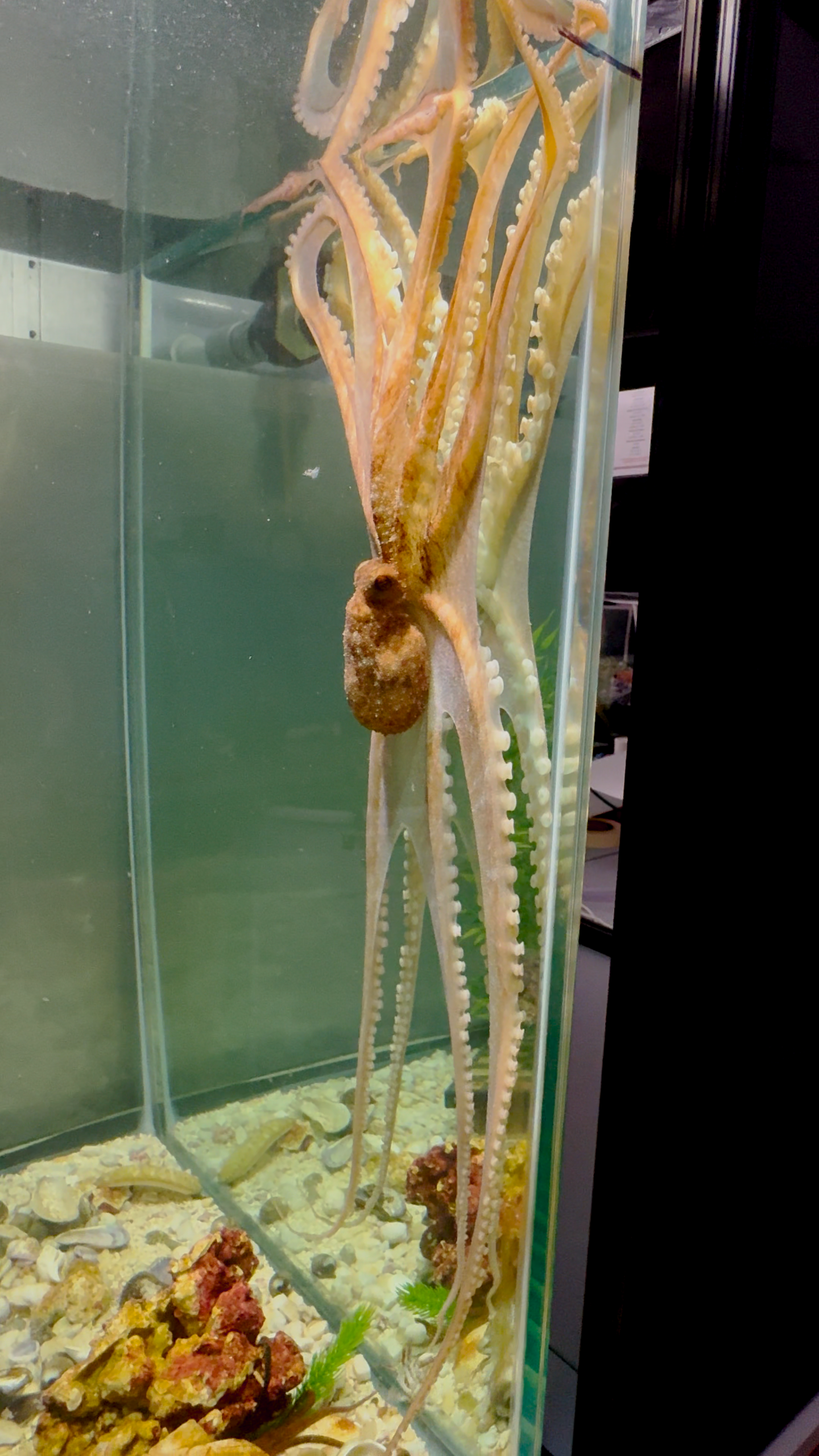
Our octopus work uses two species, Octopus insularis and Octopus bimaculoides. In January 2025, when no other new animals were available, we took in a single Caribbean reef octopus, Octopus briareus. She arrived from the Florida Keys on January 29, 2025, and we named her Pippi Longstocking for her extremely long arms.
Raising a brood from eggs
Pippi arrived already carrying sperm from the wild. Her eggs were first seen on February 11, 2025, and hatched in April; the hatchlings quickly fled and hid. Lab aquaculturist Felix Miranda raised the brood from eggs, through the juvenile stage, to adulthood. The lab-born animals were not mated during their time here, so there was no second generation.
- January 29, 2025: Pippi arrived.
- February 11, 2025: her eggs were first seen.
- April 2025: the eggs hatched, and the hatchlings quickly fled and hid.
- Mid-June 2025: the young were first seen out in the open.
- Early September 2025: counting through the night showed about ten juveniles sharing one tank.
- September 3, 2026: Aurora, the last of the brood, died, about a year and five months after hatching.
A paper describing the rearing is in preparation.
How many octopuses can you find?
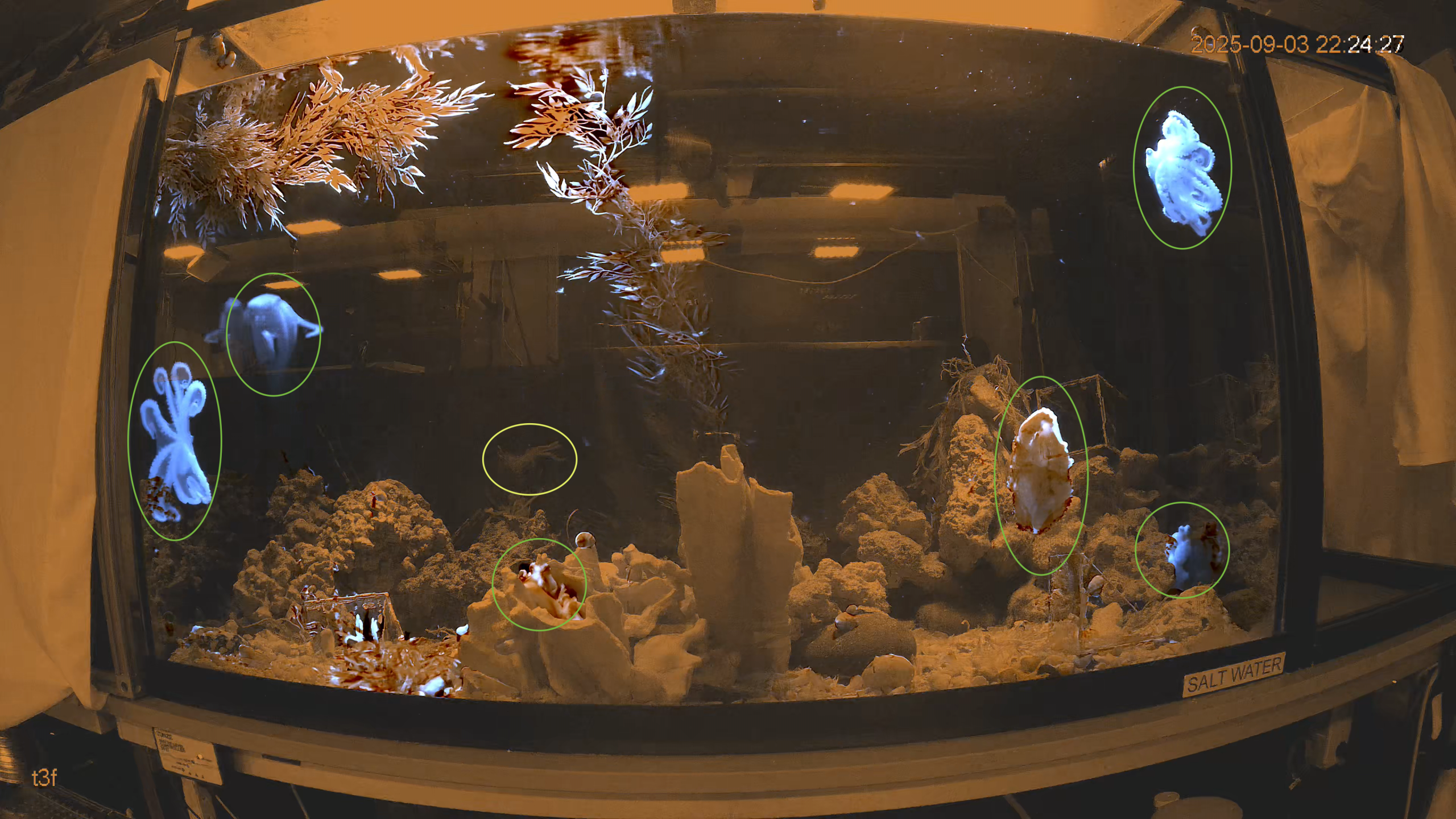
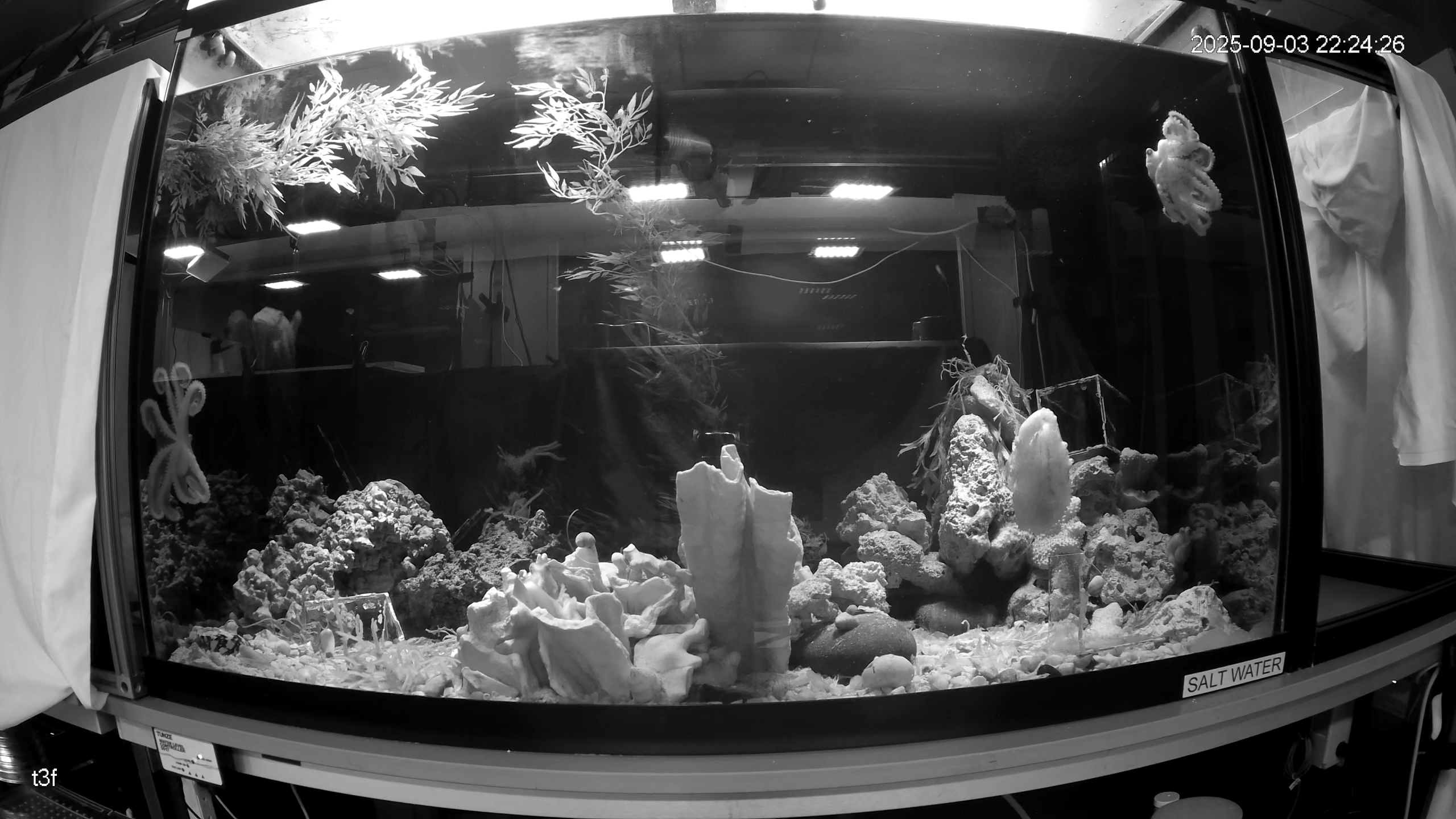
This is a frame from our tank video of early September 2025. Click the image to enlarge it, count the juveniles, then check your answer below.
See the answer
Our automatic octopus tracker found six, highlighted in blue and circled in green. The yellowish oval marks a possible seventh on the back wall. The rest of the ten were out of sight.